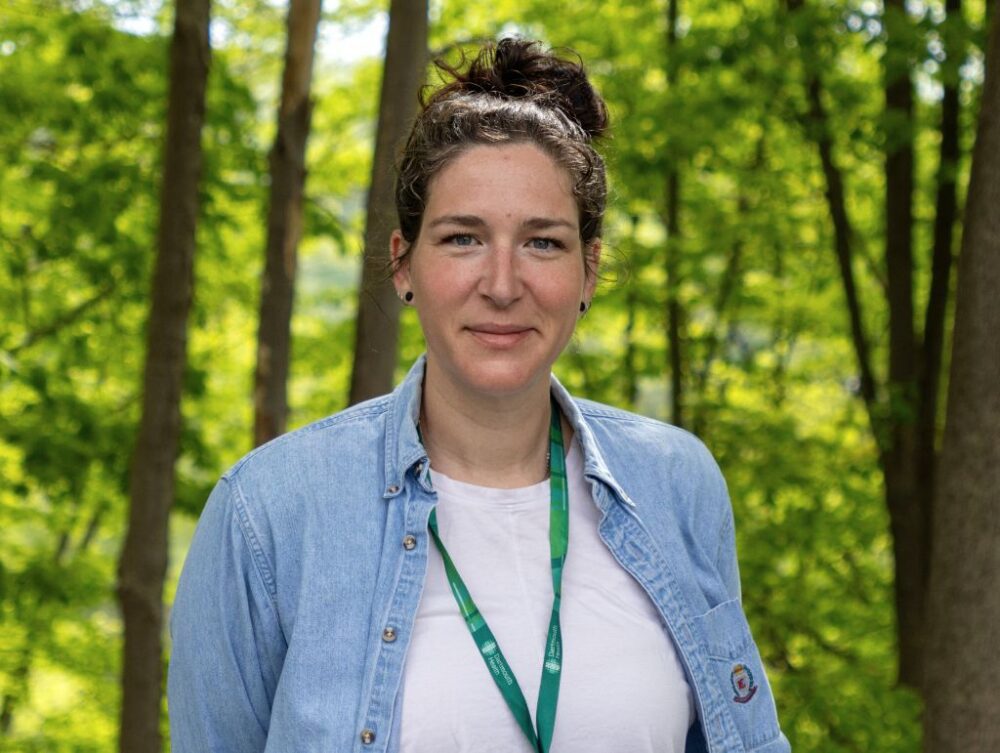
When a guest didn’t show up for a recent appointment, Diana Salzinger didn’t go looking for them.
“I’m not going to knock on their door,” she says. “I want to treat this like their home.”
That instinct, to be present without being intrusive, is at the center of Diana’s work. She is a Community Health Worker at Dartmouth Health and a Certified Recovery Support Specialist, and since January she has been embedded with the Haven’s shelter and service coordination team as part of the House Calls program, a partnership between Dartmouth Health and the Haven that began with two doctors making site visits on an as-needed basis. Diana came on to help formalize that work and be, as she puts it, “a person on the inside.”
“It’s not an alternative to primary care,” Diana says. “It’s a bridge.”
The distinction matters. The people she works with often have urgent medical needs and face real barriers to getting care: no transportation, no phone, no time to navigate a system that can be difficult even for people with stable housing. Diana helps them set up patient portals, coordinate appointments, find Medicaid transportation, and connect with providers for mental health, dental, and primary care. She accompanies people when she can. She troubleshoots when she can’t.
“I don’t cost anything. I’m not billable,” she says. “It’s just pure support.”
Being embedded rather than office-based changes what she’s able to do. When a provider is coming on site, Diana can check in with Haven staff directly to confirm who’s available. For guests without phones, that kind of proximity matters. She can ask whether someone is around. She can follow up in person.
The House Calls program is still finding its footing. Diana describes the early months as “flying the plane before it’s fully built,” with logistics like key access and referral processes still being worked out. The Wednesday provider visits are new, with plans to expand and triage as demand grows.
For Diana, the work fits into something she has been moving toward for a long time, through a culinary career, recovery support roles, and population health work at Dartmouth Health. The path was uneven, she says, but it pointed somewhere.
“I always knew I’d end up in some sector of the helping professions. I kind of let life decide what that looked like.”