Event recap video from Homelessness Awareness Day at the Haven
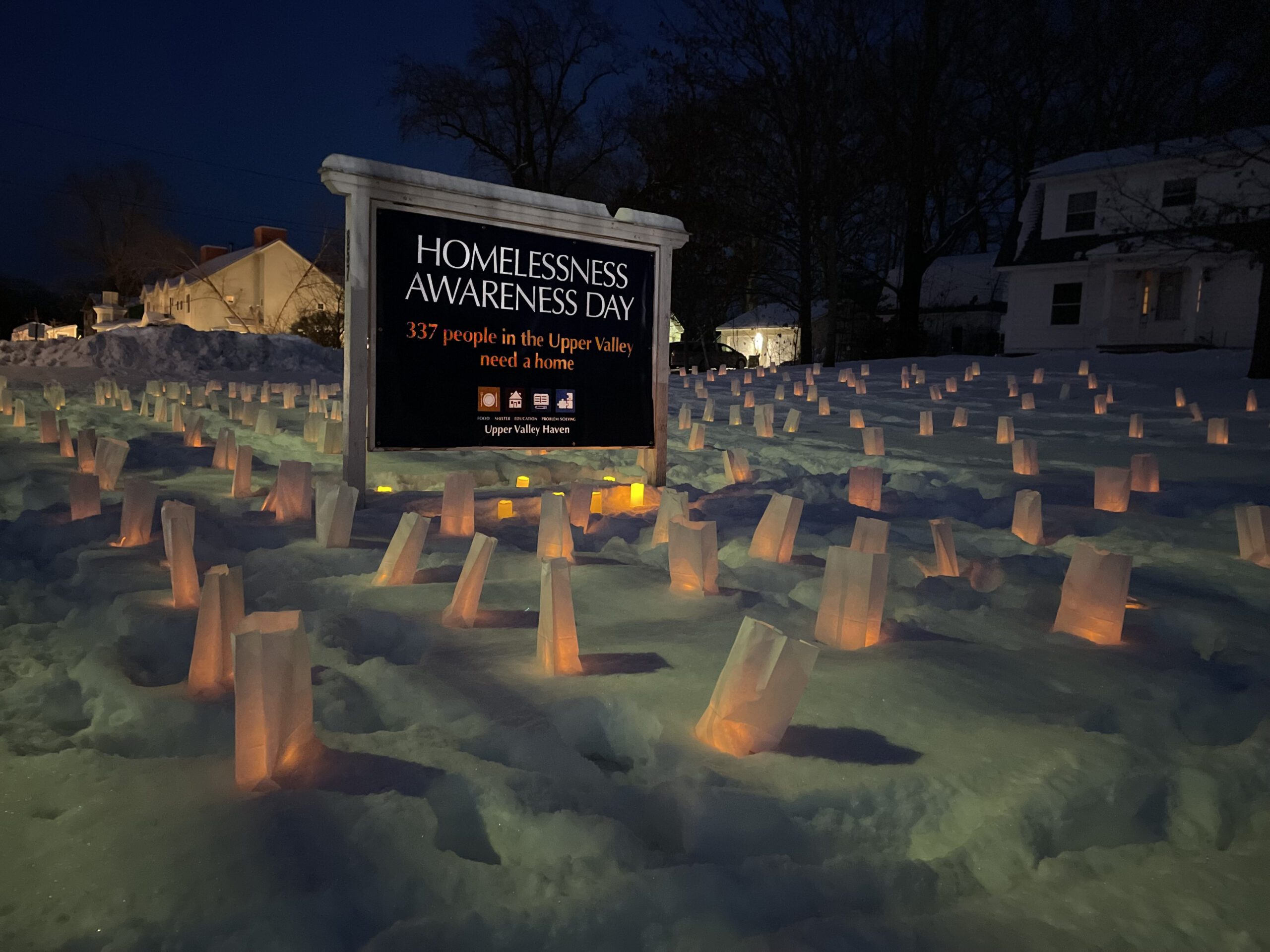
Homelessness Awareness Day
This day is about making visible the people in our region who are experiencing homelessness. A public display and community gathering help bring the scale of the issue into view and ground it in real lives. It also points toward what works: stable housing, adequate supports, and a community response that treats homelessness as solvable.
0 people
0 people
0 percent
0 percent
In-Person Gathering
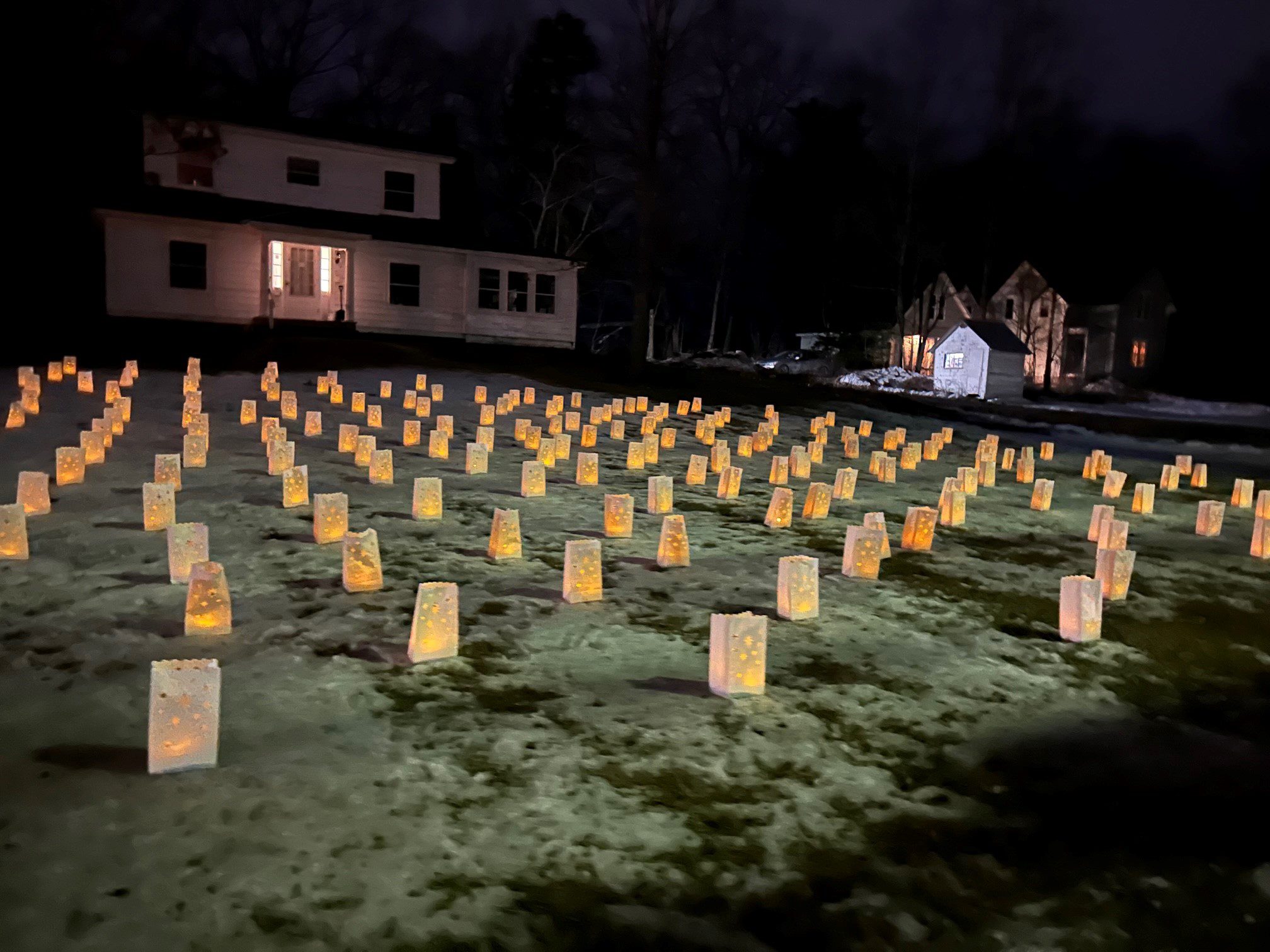
On January 22, the Haven hosted a luminary display and brief outdoor gathering on our campus. Community members gathered for remarks from local partners and Haven staff, and to make visible a crisis that is often hidden.
Each light in the luminary display represents a person in our region who is currently without stable housing. The display is meant to make visible a crisis that is often hidden and to show the scale of homelessness here in the Upper Valley.
Reflections from State Senator Joe Major
Although he was unable to attend in person, Vermont State Senator and Haven Board Member Joe Major shared the following remarks in recognition of Homelessness Awareness Day.
“Homelessness is not an abstract issue here. It is happening in our towns, our villages, and sometimes quietly, out of sight.”
It affects families, veterans, seniors, young people, and working Vermonters who are doing everything they can and still cannot find or afford a safe place to live.
In the Upper Valley, we pride ourselves on being a community that looks out for one another. We see that every day in the work of shelters, food shelves, service providers, volunteers, faith communities, and neighbors who step up when someone is in need. That compassion is real — and it matters.
But awareness alone is not enough.
Homelessness is the result of systems that are under strain: a housing market that leaves too many behind, wages that haven’t kept pace with costs, gaps in mental health care and addiction services, and a shortage of safe, affordable homes. These are complex challenges, and they require honest conversations and sustained commitment.
As your State Senator, I believe our responsibility is to meet this moment with urgency and humanity. That means investing in affordable and supportive housing. It means strengthening prevention efforts so fewer people fall into homelessness in the first place. It means supporting the frontline organizations doing the hardest work — and listening to people with lived experience, because they are the experts in what works and what doesn’t.
Most importantly, it means remembering that homelessness is about people.